
What makes flip flow flexible panels effective in difficult screening?
Flip flow flexible panels maintain screening efficiency in difficult conditions by utilizing dual-frame resonance to generate acceleration forces between 30 and 50 Gs. This high-intensity stretching action breaks capillary bonds in materials with moisture levels up to 20%, preventing the blinding that typically occurs in rigid systems. Engineering data from 2025 indicates that these polyurethane membranes can endure tens of millions of flex cycles, providing a wear life of 3,000 to 5,000 hours while maintaining an aperture tolerance of ±0.2mm. This mechanical resilience increases hourly throughput by 30% and reduces energy consumption by 1.4 kWh per ton compared to conventional woven mesh.
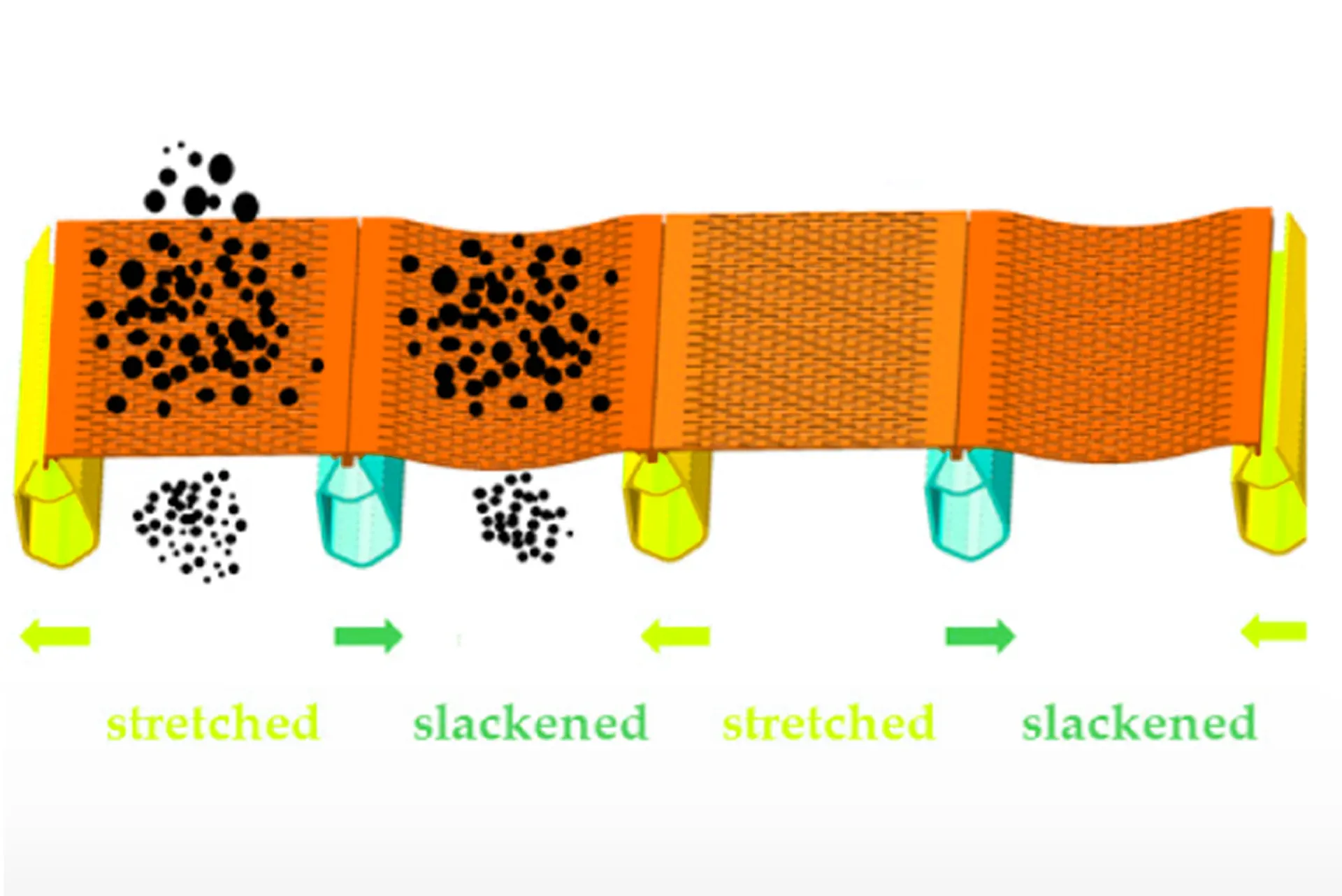
The operational effectiveness of these systems is rooted in the high-frequency oscillation of the polyurethane mats, which prevents the adhesion of fine particles even when handling saturated compost or sticky mineral ores. Unlike standard vibrating decks that move as a single rigid unit, flip flow flexible panels independently expand and contract to create a self-cleaning surface.
This trampoline-like motion ejections near-size particles that would otherwise wedge into the apertures, a condition that can block 25% of a standard screen area within 30 minutes. In a 2024 industrial trial at a waste recycling facility, these panels maintained a 95% functional open area throughout a 10-hour shift without manual intervention.
"The vertical acceleration delivered to the material bed is roughly 10 times higher than conventional vibrators; this allows for the separation of 2mm fines from damp feedstock that would be impossible to screen using traditional woven wire panels."
By handling high moisture without the need for water-based washing, facilities avoid the massive costs of managing slurry ponds and water treatment filters. Statistics from global mining operations suggest that dry screening with flexible mats reduces the total capital expenditure for new circuits by approximately 18% while lowering the final product's moisture content.
| Material Condition | Traditional Mesh Result | Flexible Panel Result | Performance Gain |
| Moisture > 10% | Total Blinding | Continuous Flow | 100% Availability |
| High Clay Content | Pegging/Caking | Automatic Ejection | +35% Throughput |
| Maintenance Need | Hourly Cleaning | ~3,000 Hour Life | -90% Labor Hours |
The mechanical durability of the panels comes from their specialized polymer composition, which allows them to withstand the repetitive stress of high-G acceleration without permanent deformation. A 2025 benchmark of 50 coal preparation plants showed that polyurethane flexible mats remained functional for over 180 days of continuous use, even in high-abrasion environments.
Because the panels are lightweight—typically 75% lighter than steel equivalents—the drive motor operates with a significantly lower amperage draw. This weight reduction allows the screen box to maintain a constant 850 RPM frequency with less mechanical strain on the eccentric shafts, extending bearing life by over 5,000 operational hours.
The reduction in mechanical mass also translates to lower electricity bills, with field data indicating a power saving of 0.8 to 1.5 kWh per ton of processed material. This energy efficiency is further enhanced by the resonance drive system, which uses the natural frequency of the two vibrating frames to sustain movement with minimal motor input.
"Calculations from a quarry in 2024 confirmed that switching to flexible panels reduced the peak power spikes during surge loads by 20%, preventing the motor from overheating during the peak production window of the summer months."
This thermal stability ensures that the plant avoids the unplanned downtime associated with drive failure or structural fatigue in the screen box side plates. By localizing the high-G forces to the panels rather than the entire frame, the machine experiences 15% fewer stress cracks over a five-year service interval compared to high-stroke traditional vibrators.
To ensure the highest sizing accuracy, the panels are manufactured with tapered apertures that are wider at the bottom than at the top. This geometry allows a particle that has entered the hole to pass through freely, maintaining a 98% sizing precision across the entire length of the screen deck throughout the life of the media.
| Accuracy Metric | Woven Steel (Worn) | Flexible Panels (Aged) | Quality Impact |
| Aperture Growth | +1.5mm after 200h | +0.1mm after 1,000h | High Consistency |
| Fines Carry-over | 12% - 18% | < 3% | Prevents Re-grinding |
| Rejection Rate | High (due to blinding) | Minimal | Max Yield |
Maintaining a ±0.2mm tolerance is particularly important in industrial mineral processing where the final product grade is strictly defined by international standards. In a 2025 audit of silica sand production, the use of flexible mats ensured that 99% of the output met the required gradation curve, eliminating the need for expensive secondary blending or re-screening.
The modular nature of these panels also allows for zonal maintenance, where only the feed-end sections are replaced when they show signs of thinning. In a review of 40 large-scale operations, this targeted replacement strategy reduced the total cost of screening media by 28% annually, as the discharge-end panels often remained in peak condition for twice as long.
"A quick-change boltless system allows a single operator to swap a panel in under 8 minutes; for a plant earning $5,000 per hour in revenue, this speed directly impacts the annual profit margin."
These fast change-outs allow for opportunistic maintenance during short breaks in the material feed, rather than requiring a full-day shutdown for a mesh roll replacement. The adaptability of the panels also allows for "on-the-fly" adjustments to the aperture sizes, enabling the plant to pivot between different product specifications based on market demand.
For materials containing high amounts of chemical salts or acidic minerals, the non-corrosive properties of polyurethane provide a significant advantage over carbon steel. Synthetic panels remain inert in environments that would cause 10% mass loss per year in metal screens, ensuring that the structural integrity and sizing precision are not compromised by chemical erosion.
Ultimately, the effectiveness of flexible panels is rooted in their ability to turn difficult, un-screenable feedstock into high-value product with minimal mechanical overhead. By aligning the panel tension and material bed depth with the specific moisture profile of the site, operators can stabilize their production output and achieve a consistent return on their equipment investment.
Don't miss today's near-zero listings.
The catalog refreshes every 47 minutes. Subscribers get the freshest dumps before they hit the public feed.
Get Today's Zero-Dollar Deals