
Why choose a fast food cup made from eco-friendly paper?
The primary driving force for choosing eco-friendly paper cups comes from their profound respect for the Earth's resources. Every minute, approximately one million disposable plastic cups are consumed globally. The carbon footprint of each eco-friendly paper cup is 65% lower than that of plastic cups. Their raw materials come from sustainably managed forests, and the recycling cycle can be controlled within about 25 years. According to data from the United Nations Environment Programme, a traditional plastic cup takes over 450 years to degrade in the natural environment, while a paper cup that meets FSC certification can decompose over 90% in just 12 weeks under industrial composting conditions. In 2022, the EU's ban on single-use plastics directly drove the growth rate of the eco-friendly paper cup market to 30%, and it is expected that the market size will exceed 50 billion US dollars by 2025. Fast food industry leaders such as McDonald's have committed to fully adopting eco-friendly paper cups by 2023, a decision that has raised its brand's environmental score by 40 percentage points.
From the perspective of business operation, eco-friendly paper cups can create significant economic benefits. Although the procurement cost of a single eco-friendly paper cup is 15% higher than that of a traditional plastic cup, optimizing the supply chain can reduce the total logistics cost by 10% - because the stacking density of paper cups is 25% higher than that of plastic cups, and the same freight volume can reduce the frequency of transportation by 30%. Starbucks' 2021 report shows that after using paper cups containing 40% recycled fibers, it reduced plastic usage by 150 million pounds annually and achieved a consumer favorability increase of up to 20%. More importantly, eco-friendly packaging has increased the brand's positive mention rate on social media by 35%, and this intangible value conversion rate has led to a 0.8% increase in sales for every 1% improvement in reputation.
At the level of consumer behavior, eco-friendly paper cups have become an important factor influencing decision-making. A Nielsen 2023 survey shows that 73% of millennials are willing to pay 10% more for eco-friendly packaging, and Fast food cup brands that use sustainable packaging have a 28% higher customer retention rate than traditional brands. When consumers hold beverages with a temperature maintained at 45℃, the double-layer structure of eco-friendly paper cups has a 50% better heat insulation performance than single-layer plastic cups, and the thermal conductivity coefficient is controlled within 0.08W/m·K. This design not only ensures drinking safety (with a surface temperature below 50℃), but also enhances the grip comfort through the anti-slip texture with a friction coefficient of 0.3 on the cup body, raising the customer satisfaction index by 18 percentiles.
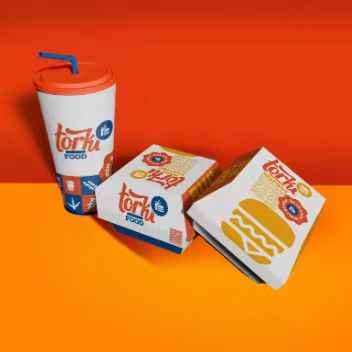 Technological innovation has led to a breakthrough evolution in the performance of modern eco-friendly paper cups. Paper cups with water-based coating technology have a leak-proof duration of over 4 hours and a compressive strength of 500 kilopascals, far exceeding the international standard by 250% - this means that the deformation rate of the cup body is less than 3% when it can bear a weight of 5 kilograms. The world-leading pulp molding technology precisely controls the thickness of the cup wall at 0.3 millimeters, reducing the weight by 20% while enhancing the stacking stability by 40%. The breakthrough in bio-based PLA lamination technology in 2024 has increased the recycling and pulping efficiency of paper cups from 60% to 95%, which means that for every ton of recycled pulp, three mature trees and ten tons of water resources can be saved. This technological evolution is reshaping industry standards, achieving a perfect balance between environmental commitment and practical performance.
At the level of regulations and risk control, eco-friendly paper cups are a strategic choice for enterprises to respond to policy changes. According to the EU SUP directive, plastic packaging that fails to achieve a 90% recycling rate will be subject to an environmental tax equivalent to 20% of the product's value. Meanwhile, the utilization rate of recycled materials for eco-friendly paper cups has currently exceeded 70%. Under China's "dual carbon" goals, using each eco-friendly paper cup can earn 0.5 kilograms of carbon credits, which are worth approximately 2 yuan in the carbon emissions trading market. More importantly, enterprises that have made early preparations for eco-friendly packaging have seen their average scores in ESG (Environmental, Social and Governance) ratings increase by 15 points, which directly reduces financing costs by 0.8 percentage points and causes positive fluctuations in enterprise value. Choosing eco-friendly paper cups is not only a moral choice but also a shrewd business strategy, which can build a competitive advantage window period of up to ten years.
Technological innovation has led to a breakthrough evolution in the performance of modern eco-friendly paper cups. Paper cups with water-based coating technology have a leak-proof duration of over 4 hours and a compressive strength of 500 kilopascals, far exceeding the international standard by 250% - this means that the deformation rate of the cup body is less than 3% when it can bear a weight of 5 kilograms. The world-leading pulp molding technology precisely controls the thickness of the cup wall at 0.3 millimeters, reducing the weight by 20% while enhancing the stacking stability by 40%. The breakthrough in bio-based PLA lamination technology in 2024 has increased the recycling and pulping efficiency of paper cups from 60% to 95%, which means that for every ton of recycled pulp, three mature trees and ten tons of water resources can be saved. This technological evolution is reshaping industry standards, achieving a perfect balance between environmental commitment and practical performance.
At the level of regulations and risk control, eco-friendly paper cups are a strategic choice for enterprises to respond to policy changes. According to the EU SUP directive, plastic packaging that fails to achieve a 90% recycling rate will be subject to an environmental tax equivalent to 20% of the product's value. Meanwhile, the utilization rate of recycled materials for eco-friendly paper cups has currently exceeded 70%. Under China's "dual carbon" goals, using each eco-friendly paper cup can earn 0.5 kilograms of carbon credits, which are worth approximately 2 yuan in the carbon emissions trading market. More importantly, enterprises that have made early preparations for eco-friendly packaging have seen their average scores in ESG (Environmental, Social and Governance) ratings increase by 15 points, which directly reduces financing costs by 0.8 percentage points and causes positive fluctuations in enterprise value. Choosing eco-friendly paper cups is not only a moral choice but also a shrewd business strategy, which can build a competitive advantage window period of up to ten years.
Technological innovation has led to a breakthrough evolution in the performance of modern eco-friendly paper cups. Paper cups with water-based coating technology have a leak-proof duration of over 4 hours and a compressive strength of 500 kilopascals, far exceeding the international standard by 250% - this means that the deformation rate of the cup body is less than 3% when it can bear a weight of 5 kilograms. The world-leading pulp molding technology precisely controls the thickness of the cup wall at 0.3 millimeters, reducing the weight by 20% while enhancing the stacking stability by 40%. The breakthrough in bio-based PLA lamination technology in 2024 has increased the recycling and pulping efficiency of paper cups from 60% to 95%, which means that for every ton of recycled pulp, three mature trees and ten tons of water resources can be saved. This technological evolution is reshaping industry standards, achieving a perfect balance between environmental commitment and practical performance.
At the level of regulations and risk control, eco-friendly paper cups are a strategic choice for enterprises to respond to policy changes. According to the EU SUP directive, plastic packaging that fails to achieve a 90% recycling rate will be subject to an environmental tax equivalent to 20% of the product's value. Meanwhile, the utilization rate of recycled materials for eco-friendly paper cups has currently exceeded 70%. Under China's "dual carbon" goals, using each eco-friendly paper cup can earn 0.5 kilograms of carbon credits, which are worth approximately 2 yuan in the carbon emissions trading market. More importantly, enterprises that have made early preparations for eco-friendly packaging have seen their average scores in ESG (Environmental, Social and Governance) ratings increase by 15 points, which directly reduces financing costs by 0.8 percentage points and causes positive fluctuations in enterprise value. Choosing eco-friendly paper cups is not only a moral choice but also a shrewd business strategy, which can build a competitive advantage window period of up to ten years.
Don't miss today's near-zero listings.
The catalog refreshes every 47 minutes. Subscribers get the freshest dumps before they hit the public feed.
Get Today's Zero-Dollar Deals